Ecommerce in Latin America and Panama 2025: Growth, AI, and Strategic Opportunities for Retail Brands
2025 marks a new era for ecommerce in Panama. With more connected consumers and brands embracing AI and personalization, digital retail opportunities have never been greater. Learn how to ride this wave of growth and build an online store ready to scale.
Ecommerce in Latin America is experiencing a historic moment. While the global market slows down, the region continues to grow at double-digit rates, driven by technological adoption, the rise of mobile commerce, and a new generation of digital consumers.
Panama stands out as a key player in this ecosystem: a small country in size, but with one of the highest digital penetration rates in Central America and a growing entrepreneurial mindset focused on innovation.
For retail brands with an online presence, from fashion boutiques to consumer goods chains, 2025 represents a decisive opportunity to strengthen their ecommerce operations, integrate artificial intelligence (AI) tools, and prepare for the most impactful commercial seasons: Black Friday and Christmas.
A Region Leading Global Growth
According to eMarketer, Latin America will lead the world in online retail growth in 2025, with a projected increase of 12.2%, growing about 1.5 times faster than the global average. Argentina shows a notable recovery after years of instability, while Brazil and Mexico maintain dominant volumes, and Central America emerges as a multi-billion-dollar market with great potential.
Ecommerce in the region is no longer a promise; it has become a solid industry that redefines how consumers discover, compare, and buy products. From large marketplaces to independent online stores, Latin American shoppers are looking for more personalized, fast, and trustworthy buying experiences, pushing brands to raise their digital standards.
Panama: The New Regional Ecommerce Hub
Ecommerce in Panama has grown steadily over the past five years, becoming an essential part of the country’s business ecosystem. In 2025, total online sales are expected to reach USD 1.173 billion, positioning Panama as the 65th largest ecommerce market in the world (DataReportal 2025).
Key figures that define the trend
- Internet penetration: 78% of the population (3.54 million users).
- Mobile connections: 5.40 million (+4.1% compared to 2024).
- Mobile broadband: 88.2% of total connections.
- Projected annual growth: 20.31% (2025–2030).
- Mobile preference: Mobile commerce now surpasses desktop shopping.
This landscape reflects a connected, informed, and demanding consumer. Brands that deliver smooth, mobile-first shopping experiences will be the ones to capture the growth of the coming years.
Online Retail Becomes More Sophisticated
The rise of ecommerce goes far beyond product sales; it redefines what it means to build a brand. Today’s Panamanian and Latin American consumers are not just looking for a product. They seek trust, speed, flexible payment options, and instant support.
Modern online retail combines storytelling, usability, and technology. Every click is part of an integrated experience where the website, email marketing, social media, and logistics work together to create value and long-term loyalty.
In this context, choosing the right ecommerce platform is one of the most strategic decisions for any brand aiming to grow and scale effectively.
Platforms Powering Modern Ecommerce in Panama
Platform selection is one of the most important factors in the success of any online store. In Panama, data from AfterShip Ecommerce Statistics (2025) show a diverse and competitive market with a clear preference for flexible and scalable solutions.
Ecommerce Platform Landscape in Panama (2025)
According to AfterShip’s 2025 report, Panama’s ecommerce ecosystem is dominated by two major players: WooCommerce and Shopify.

Source: AfterShip Ecommerce Statistics – Panama 2025
These numbers reveal a clear preference: more than three-quarters of all online stores in Panama use WooCommerce or Shopify. Both platforms lead for their adaptability across business models and compatibility with omnichannel strategies and AI tools.
WooCommerce: Control and Flexibility
WooCommerce remains the preferred choice for brands that want complete control over their website and content. Its native integration with WordPress makes it a powerful tool for businesses that value SEO, customization, and technological independence.
Key Advantages:
- Full ownership of infrastructure and data.
- Extensive developer and plugin community.
- Ideal for content-driven commerce strategies.
Considerations:
- Requires technical maintenance and optimized hosting.
- Needs proper planning to scale without compromising performance.
Shopify: Speed and Scalability
Shopify ranks second in Panama (35.72%), solidifying its position as the most widely used solution among brands that prioritize ease of use and quick deployment. Its SaaS model allows businesses to focus on sales and marketing while the platform handles security, hosting, and updates.
Key Advantages:
- Ideal for expanding retailers.
- Robust ecosystem of apps and integrations.
- Seamless connection with social channels and global marketplaces.
Considerations:
- Less flexibility for advanced customization.
- Ongoing costs for licenses and add-on apps.
Other Platforms on the Rise
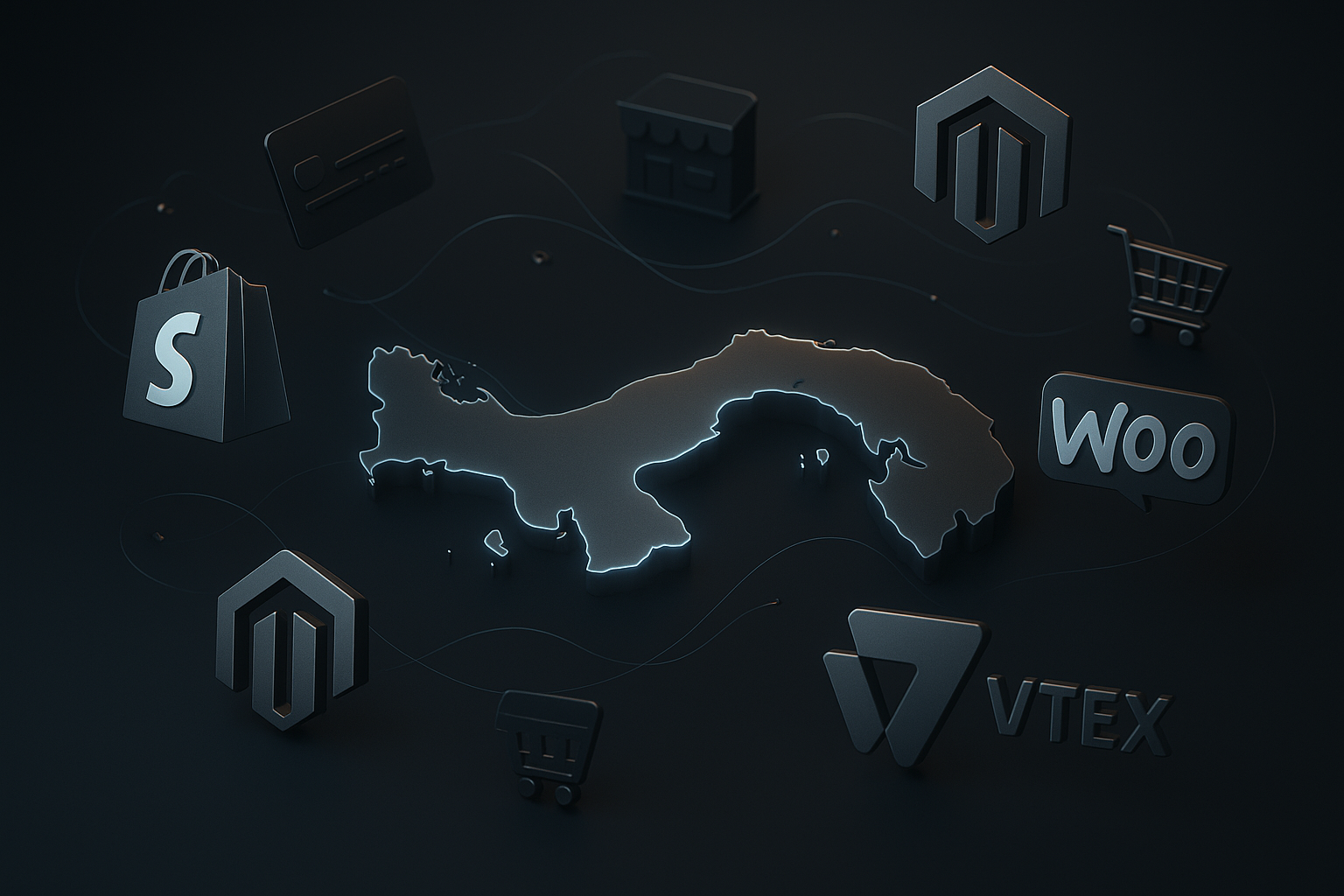
Wix and custom-built ecommerce sites are also gaining traction, especially among small and medium-sized businesses seeking independence and fully personalized design. Meanwhile, Magento (Adobe Commerce) and VTEX, although with smaller shares (1.25% and 0.69%), remain key solutions for corporate retailers requiring robust architectures, ERP integrations, and regional operations.
The Role of Artificial Intelligence in Ecommerce
Artificial intelligence is already transforming how brands sell and connect with customers. Companies using AI, whether to personalize experiences or automate logistics, are seeing higher conversion rates and stronger customer loyalty.
According to Grand View Research, the Latin American market for AI in retail will grow from USD 742.8 million in 2024 to USD 3.48 billion in 2030, representing an annual growth rate of nearly 29%. AI is no longer the future of ecommerce; it is very much the present.
Key Applications for Digital Retail
- Personalized recommendations: Predictive engines suggest products based on behavior and preferences.
- Intelligent chatbots: 24/7 support using natural language and automation.
- Dynamic pricing: Real-time analysis of competitors and profit margins.
- Demand forecasting: Models that anticipate consumption peaks to adjust inventory and logistics.
- Advanced segmentation: Grouping customers automatically by habits, location, and lifetime value.
- Generative content creation: AI-generated product descriptions, emails, and marketing campaigns.
Inspiring Case: THG Ingenuity + Google Cloud
In 2025, THG Ingenuity, one of the world’s leading digital commerce providers, announced the integration of Google Cloud’s Vertex AI and Gemini models within its ecommerce ecosystem. This collaboration focuses on optimizing demand planning and automating creative production using AI models like Veo and Imagen, capable of generating product photos and videos from text prompts.
The impact of this innovation sets a precedent for retail brands: AI-driven cloud infrastructure can reduce production costs, improve personalization, and accelerate global expansion.
AI and Customer Experience: The New Standard of Personalization
In a world where every consumer sees thousands of ads daily, personalization is no longer a luxury; it is a necessity. AI ensures that every visit feels unique, from displaying relevant products to adapting banners based on real-time behavior.
Machine learning algorithms not only predict what the customer wants but also when they want it. For retail brands, this means more efficient campaigns, less wasted ad spend, and an experience that feels truly personal. By 2025, companies that fail to integrate AI into their ecommerce strategy will be at a clear disadvantage compared to those that do.
Black Friday 2025: The Most Strategic Event of the Year

Black Friday is much more than a day of discounts. It marks the beginning of the highest digital sales season and serves as a measure of each country’s ecommerce maturity. For Panama and the broader region, 2025 will be a turning point. Shoppers are now comfortable buying online and expect speed, trust, and real value.
Key Trends for the Season
- Mobile-first dominance: 74% of online transactions in Panama happen on smartphones.
- Early sales: Many brands launch promotions a week before Black Friday.
- AI-powered campaigns: Dynamic remarketing and smart recommendations based on browsing history.
- Psychological urgency: Tactics such as “limited-time offers,” “guaranteed shipping,” and “exclusive stock.”
- Interactive content: Short videos, AR filters, and immersive experiences to showcase products.
Global Best Practices (ConvertCart)
- Early access to discounts for subscribers or VIP members.
- AI-driven product bundles that identify purchase affinities.
- Automated cart recovery emails with personalized incentives.
- SEO-optimized landing pages by category (fashion, tech, beauty).
- CRM and ecommerce integration for post-purchase engagement.
Christmas 2025: Emotion, Trust, and Retention

If Black Friday drives acquisition, Christmas builds loyalty. During this season, consumers look for more than just price, they seek emotional connection and convenience.
Brands that combine technology with empathy will achieve the best results. Data helps identify what customers purchased last year, when they buy, and what messages motivate them to return.
Key Factors for the Holiday Campaign
- Warm, visually consistent communication that reflects the brand identity.
- Holiday bundles and guaranteed deliveries before December 24.
- Storytelling focused on values such as sustainability, closeness, and memorable experiences.
- High-value remarketing based on Black Friday interactions.
- True omnichannel strategies that align ecommerce, social media, and physical stores.
Regional Example
In markets like Mexico and Colombia, generative AI is already being used to create personalized product videos and customized email campaigns based on each user’s purchase intent. Panama is moving in the same direction, towards a digital retail landscape that blends emotion with technological precision.
The Intersection of Growth, Technology, and Trust
The growth of ecommerce in Panama and Latin America is not just an economic trend; it represents a structural shift in how business is done.The lines between physical and digital retail continue to blur, and brands adopting a data-driven mindset will better understand their customers, anticipate demand, and deliver consistent experiences.
As consumers become more demanding, technology provides the tools to respond with agility. AI, cloud computing, and scalable platforms like Shopify, WooCommerce, VTEX, and Adobe Commerce are no longer exclusive to large corporations. They are accessible allies for any retailer that wants to compete, and thrive on a global scale.
FAQ
1. What is the most popular ecommerce platform in Panama in 2025?
According to AfterShip Ecommerce Statistics 2025, WooCommerce leads the market with 42.26% of online stores, followed by Shopify with 35.72%. This shows a strong preference for flexible and scalable solutions, chosen by both small local brands and established retailers.
2. Why is ecommerce growing so fast in Panama?
It all starts with connectivity. 78% of the population has access to the internet, and there are already over 5 million mobile connections. More and more Panamanians are choosing to shop online. Ecommerce never sleeps, it’s open 24/7; allowing businesses to save on operating costs while reaching a wider audience. On top of that, the market keeps expanding and is expected to grow around 20% annually through 2030.
3. Where should I start if I want to launch an online store for my business?
The first step is to define what you’re going to sell, who your target audience is, and what goals you want to achieve; whether it’s direct sales, visibility, or regional expansion. Next, choose the right platform (Shopify, WooCommerce, VTEX, etc.) based on your business type, budget, and growth projection. At BlueTide, we help you build this strategic foundation so your store launches with a solid and scalable structure.
4. How much does it cost to create an ecommerce site?
The cost depends on the scope of the project, number of products, level of customization, integrations, design, payment gateways, and more. A basic store can be developed with a moderate investment, while a more robust ecommerce site, with large catalogs or ERP/CRM integrations; requires a larger budget. The key is to ensure your investment aligns with your business goals and the user experience you want to deliver.
5. What are the main differences between WooCommerce, Shopify, and VTEX?
- WooCommerce offers full control and freedom for customization.
- Shopify stands out for its speed and ease of use.
- VTEX is geared toward medium and large retailers looking for omnichannel capabilities and enterprise scalability.
The right choice depends on your desired level of customization, available budget, and growth expectations.
6. What role will AI play in ecommerce in the coming years?
AI is no longer just a supporting tool, it’s becoming the core of modern ecommerce. Brands that embrace it can anticipate customer behavior, automate decisions, and deliver hyper-personalized experiences while optimizing their operations. By 2025, companies investing in AI won’t just sell more; they’ll build stronger, longer-lasting relationships with their customers.